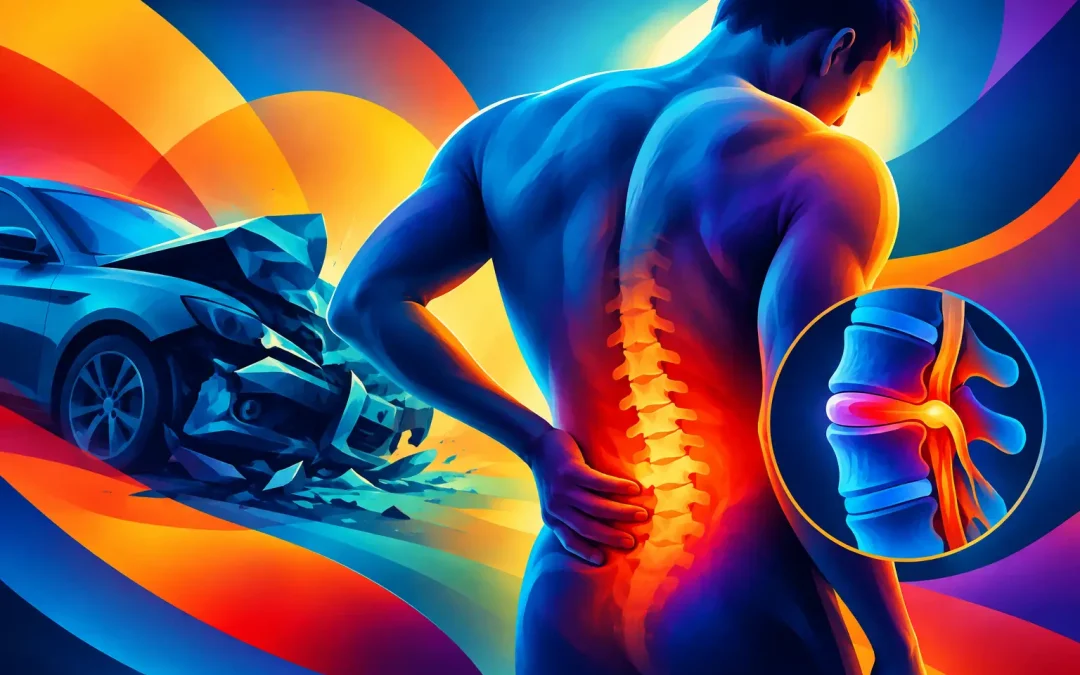
A rear-end collision can leave you with more than a sore back. The force of an impact can aggravate or cause damage to a spinal disc, sometimes producing pain that travels into an arm, buttock, leg, or foot. This guide to treating disc herniation explains what to do after an accident, what treatment may involve, and why getting evaluated quickly protects both your health and your injury case.
A disc injury is not something to guess about or try to push through. Some people feel sharp pain immediately after a crash. Others wake up stiff the next morning, then develop numbness, weakness, or shooting pain days later. Even a low-speed collision can cause a real injury, especially when the body is caught off guard by the impact.
What a Herniated Disc Means
Spinal discs are the cushions between the bones of your spine. Each one has a firmer outer layer and a softer center. A herniated disc occurs when the inner material pushes through or beyond a weakened area of the outer layer. That material can irritate nearby nerves or place pressure on them.
Herniations can occur in the neck or lower back. A cervical disc herniation may cause neck pain, headaches, shoulder-blade pain, tingling in the arm, or weakness in the hand. A lumbar disc herniation can cause low back pain, sciatica, numbness down the leg, or pain that reaches the foot.
Symptoms do not always match the size of the herniation. A small disc problem in the wrong location can be extremely painful if it affects a nerve. On the other hand, imaging may show a disc bulge that is not causing the current symptoms. That is why a proper examination matters. Your provider should connect your symptoms, physical findings, accident history, and any imaging results instead of treating an MRI report alone.
Guide to Treating Disc Herniation After an Auto Accident
The right treatment depends on the location of the injury, the severity of nerve involvement, your medical history, and how your body responds over time. Most people begin with conservative care, but conservative does not mean passive or incomplete. It means using a structured plan to reduce irritation, restore movement, and monitor for signs that a higher level of care is needed.
Get evaluated as soon as possible
Call for an evaluation promptly after a crash, even if you believe the pain will fade. Delayed symptoms are common with disc and soft-tissue injuries. Early documentation also creates a clear record of your condition, your reported symptoms, and the care you need following the accident.
During an injury evaluation, your provider may assess posture, range of motion, reflexes, strength, sensation, muscle spasm, and the movements that increase or reduce symptoms. X-rays may be appropriate in some cases. If your symptoms suggest a disc injury or nerve compression, an MRI referral may be considered because it provides a clearer view of discs and other soft tissues.
Do not assume an X-ray rules out a disc herniation. X-rays can help evaluate bone alignment and fractures, but they do not show disc damage as clearly as an MRI.
Calm the pain without becoming inactive
In the earliest phase, the goal is to avoid repeatedly aggravating the injured area while keeping the body from becoming excessively stiff. Short periods of relative rest can be helpful. Staying in bed for days, however, can weaken supporting muscles and make recovery harder.
Your care plan may include hands-on treatment, guided mobility work, therapeutic modalities, massage therapy, and targeted rehabilitation. Cold or heat may be recommended depending on the stage of your injury and your symptoms. Your medical providers may also discuss medication options when appropriate.
The key is not simply finding temporary relief. If pain drops for a few hours but numbness, weakness, or restricted motion remains, the underlying problem still needs attention.
Use treatment that matches your symptoms
A herniated disc requires individualized care. Some patients need gentle treatment first because inflammation and muscle guarding are severe. Others are ready to begin controlled rehabilitation sooner. Exercises should not be selected because they are popular online. They should be chosen based on whether they centralize pain, improve movement, and allow the injured tissues to tolerate more activity safely.
Chiropractic care can be part of a conservative treatment plan when it is clinically appropriate. The approach should be based on a thorough exam and adjusted to your injury presentation. Aggressive treatment is not automatically better, particularly when acute pain, neurological symptoms, or instability are present.
Physical therapy and rehabilitation are often central to recovery. Treatment may focus on restoring safe spinal movement, improving core and hip strength, reducing muscle compensation, and helping you return to work, driving, lifting, and daily activities without repeatedly flaring your symptoms. Clinical Pilates may also be helpful for some patients once they can tolerate controlled, low-impact stabilization work.
Spinal decompression may be considered for certain patients with disc-related symptoms. It is not right for every person or every spinal condition. A qualified provider should determine whether it fits your diagnosis, tolerance, and treatment goals.
Follow through when pain starts to improve
One of the most common mistakes after an auto accident is stopping care the moment the worst pain settles down. Pain relief is encouraging, but it does not always mean the area has regained normal strength, mobility, or endurance.
Disc injuries can leave people vulnerable to flare-ups when they return too quickly to heavy lifting, long drives, repetitive bending, sports, or physical work. Your rehabilitation plan should progress in stages. Early care may focus on symptom reduction. Later sessions should prepare you for the activities that caused difficulty in real life.
Be honest about what triggers your symptoms. Tell your provider if driving, sitting at a desk, carrying groceries, climbing stairs, sleeping, or turning your head causes pain. These details help shape a plan that is practical, not generic.
When Disc Herniation Needs Urgent Medical Attention
Most disc herniations do not require emergency surgery, but certain symptoms need immediate medical evaluation. Do not wait for a routine appointment if you have new or worsening leg or arm weakness, loss of bowel or bladder control, numbness in the groin or inner thigh area, severe trouble walking, or rapidly escalating pain with neurological changes.
These symptoms can point to significant nerve compression or another serious condition. Go to an emergency department or seek urgent medical help immediately.
Less dramatic symptoms still deserve prompt care. Persistent tingling, pain traveling down an arm or leg, loss of grip strength, foot weakness, or symptoms that interfere with sleep and daily activity should be evaluated without delay.
Protecting Your Recovery and Your Injury Claim
After a car accident, your health comes first. Still, the steps you take medically can affect the clarity of your personal injury claim. Insurance companies often scrutinize delays in treatment, missed appointments, gaps in care, and whether medical records support the severity of the reported injury.
That does not mean you should seek treatment for paperwork alone. It means your records should accurately reflect the care you genuinely need. Attend recommended appointments, follow home instructions, report new symptoms, and keep your providers informed about changes in your condition. If a specialist referral or imaging is medically necessary, follow through.
Avoid minimizing your pain at the first visit because you do not want to make a fuss. Describe your symptoms clearly and accurately. Explain what hurts, where the pain travels, when it began, what makes it worse, and how it affects your daily life. Small details can be medically meaningful.
Atlas Injury Center provides accident-focused chiropractic and rehabilitation care for patients who need a clear treatment plan after a crash. If you are hurting, call us right away rather than waiting to see whether symptoms disappear on their own.
Recovery Is a Process, Not a Deadline
Some people improve substantially in weeks with consistent conservative treatment. Others need a longer course of rehabilitation, additional imaging, pain management, or specialist involvement. Recovery time depends on the injury itself, whether a nerve is involved, your previous spinal health, the physical demands of your work, and how consistently you can follow your treatment plan.
You do not need to decide on surgery simply because the words “herniated disc” appear in a report. Surgery is generally considered when serious neurological deficits are present, when red-flag symptoms develop, or when well-directed conservative care has not provided adequate improvement. That decision should be made with the appropriate medical and surgical specialists after a complete evaluation.
The best next step is simple: take your symptoms seriously, get examined, and give your body the organized care it needs. Acting early can help control pain, document your injury properly, and put you on a safer path back to normal movement and daily life.