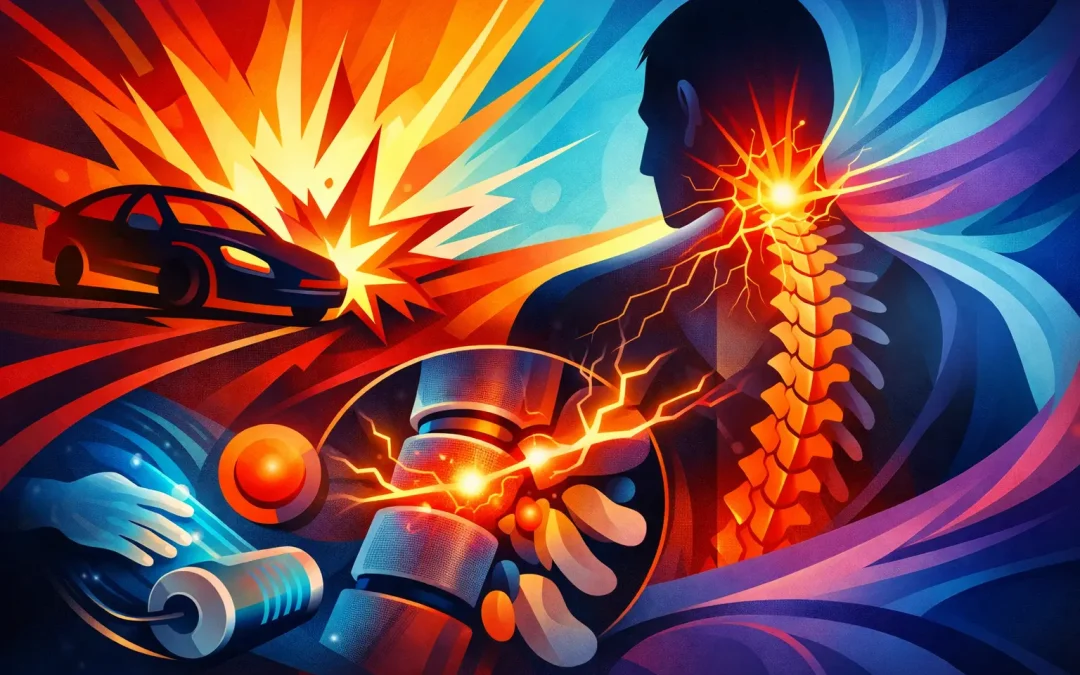
A rear-end collision can leave you with more than a sore neck. Hours or days later, you may feel burning pain down an arm, tingling in your fingers, numbness in a leg, or weakness when you try to lift something. The best treatments for pinched nerve symptoms start with finding out what is irritating the nerve and addressing it early, before pain and limited movement become your new normal.
After an accident, do not assume nerve symptoms will disappear on their own just because the vehicle damage looked minor. A sudden force through the neck, back, shoulder, or hip can inflame tissues, strain joints, and change how the spine moves. Those changes can narrow the space around a nerve or cause swelling that puts pressure on it.
First, Get the Right Evaluation
A pinched nerve is a description of symptoms, not a complete diagnosis. The nerve may be irritated near the neck, middle back, low back, shoulder, wrist, or hip. In accident cases, neck and low-back involvement are especially common because of the forces placed on the spine during impact.
A proper evaluation should look beyond the location where you feel pain. For example, numbness in the hand may begin with irritation in the neck. Pain that shoots down the back of the leg may relate to the low back rather than a problem in the calf. Your provider may assess posture, spinal motion, muscle strength, reflexes, sensation, walking, and the movements that reproduce your symptoms. Imaging or referral for additional medical evaluation may be appropriate when the exam suggests a more serious injury.
This step matters for your recovery and for accident documentation. Waiting until symptoms become severe can make treatment more difficult and leave a gap in the record of how the crash affected you. Call for an evaluation as soon as possible after an accident, even if the symptoms seem manageable at first.
Best Treatments for Pinched Nerve Pain Depend on the Cause
There is no one treatment that is right for every pinched nerve. A plan should reflect the injured area, the severity of numbness or weakness, your medical history, and how recently the crash occurred. The goal is not simply to mask pain. It is to reduce irritation around the nerve, restore safe movement, and help prevent the problem from returning.
Gentle Chiropractic Care and Joint Mobility
When restricted spinal joints, poor movement patterns, or muscle guarding are contributing to nerve irritation, gentle chiropractic treatment may help improve mobility and reduce stress on nearby tissues. Treatment should be individualized, particularly after trauma. A patient with acute inflammation may need a lighter approach than someone who is several weeks into recovery and dealing with persistent stiffness.
Chiropractic care is not a substitute for emergency treatment when there are serious neurological symptoms or suspected fracture. It is one part of a coordinated recovery plan after an appropriate examination.
Physical Therapy and Targeted Rehabilitation
Rest may be useful briefly after an injury, but too much inactivity can lead to stiffness, weakness, and fear of movement. Physical therapy helps patients rebuild control and strength without forcing painful movements. The right exercises can improve spinal support, shoulder stability, hip mobility, balance, and the ability to return to work, driving, lifting, or sports.
For a nerve irritated in the neck, treatment may focus on posture, upper-back mobility, and deep neck muscle control. For low-back nerve symptoms, the plan may include core stabilization, hip movement, walking tolerance, and safe lifting mechanics. Exercise is not one-size-fits-all. The wrong exercise, or doing the right one too aggressively, can worsen symptoms.
Spinal Decompression When Appropriate
Spinal decompression may be considered for certain patients with disc-related back or neck pain, radiating symptoms, or pressure-sensitive spinal conditions. This non-surgical treatment uses controlled traction to gently change pressure through the spine. Some patients report relief when it is combined with rehabilitation and hands-on care.
It is not appropriate for everyone. Your provider should first screen for conditions that require another medical approach. Decompression is most useful when it fits the diagnosis, not when it is treated as an automatic answer to every case of leg or arm pain.
Soft-Tissue Therapy for Muscle Guarding
After a crash, muscles often tighten to protect an injured area. Unfortunately, that guarding can add tension around already irritated nerves and joints. Massage therapy and other soft-tissue techniques can help reduce muscle tightness, improve circulation, and make it easier to participate in active rehabilitation.
This is especially helpful when neck pain is accompanied by tight shoulders and headaches, or when low-back pain is paired with hip and glute muscle spasm. Soft-tissue treatment can provide meaningful relief, but lasting improvement usually requires restoring movement and strength as well.
Clinical Pilates and Movement Retraining
For patients who are ready to progress beyond early pain control, clinical Pilates can build controlled strength, coordination, and body awareness. This can be valuable after a pinched nerve because people naturally compensate for pain. They may lean to one side, stop using an arm normally, or move through the back in a way that overloads another area.
The purpose is not to push through symptoms. It is to retrain movement in a measured way so the body can handle everyday demands with less strain. For a parent lifting a child, a worker getting in and out of a vehicle, or a driver sitting through traffic, that control matters.
What You Can Do Between Visits
Avoid heavy lifting, repetitive bending, and any position that clearly makes numbness, tingling, or radiating pain worse. At the same time, do not stay completely still all day unless a medical professional tells you to. Short, frequent walks and gentle position changes are often better tolerated than long periods on the couch or in bed.
Use good support when sitting, especially during long drives. Keep your phone at eye level instead of looking down for extended periods, and avoid sleeping in a position that sharply twists the neck or low back. Ice or heat may help different patients at different stages of recovery, but neither should replace an evaluation when nerve symptoms are present.
Take note of what changes your symptoms. Tell your provider whether pain travels farther down the arm or leg, whether your grip feels weaker, or whether a certain movement brings on tingling. Those details help guide treatment decisions.
When a Pinched Nerve Needs Urgent Medical Attention
Some symptoms require immediate medical evaluation rather than waiting for a routine appointment. Seek urgent help for new or worsening weakness, trouble walking, loss of bowel or bladder control, numbness in the groin or saddle area, severe unrelenting pain, fever with back pain, or symptoms following a significant head or spinal injury.
A sudden loss of coordination, facial drooping, speech difficulty, chest pain, or shortness of breath also needs emergency care. Do not try to self-treat these warning signs with stretching, massage, or over-the-counter medication.
Recovery Is More Than Getting Through the Pain
A pinched nerve can improve in days for some people and take weeks or longer for others. Recovery depends on the source of nerve irritation, the extent of the injury, your job demands, and how consistently the underlying movement problem is addressed. Pain reduction is encouraging, but it should not be the only measure of progress. Restored strength, normal sensation, safer movement, and the ability to function at work and home matter too.
For auto accident patients, clear records of symptoms, examinations, treatment recommendations, and functional limits are also essential. Atlas Injury Center provides coordinated chiropractic and rehabilitation care designed to help patients understand their injuries and follow a plan built around recovery, not guesswork.
Do not wait for burning pain or numbness to become unbearable before asking for help. Early, individualized care gives your body a better chance to calm the irritation, regain confidence in movement, and get back to the life the accident interrupted.