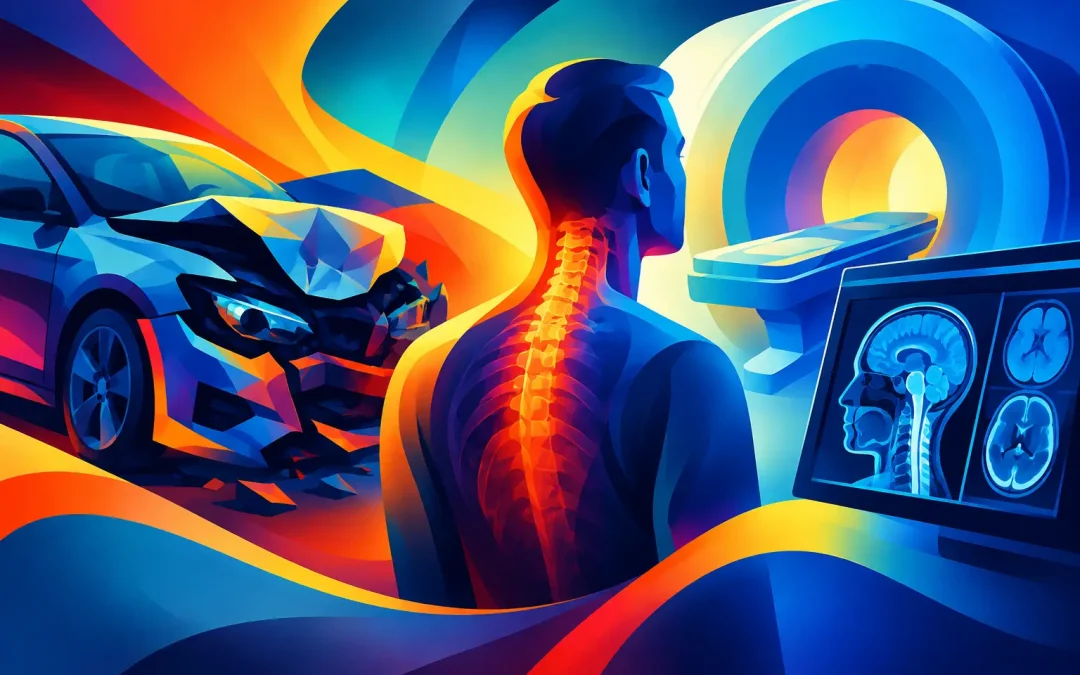
A low-speed crash can still leave you with a serious injury. You may walk away, exchange insurance information, and feel only shaken up – then wake up the next morning with a stiff neck, deep back pain, headaches, or tingling in an arm. One of the first questions patients ask is when imaging is needed after a car accident. The answer depends on your symptoms, the force of the collision, your medical history, and what your exam shows.
At Atlas Injury Center, we do not treat every accident the same way. We listen to how the crash happened, evaluate your movement and symptoms, and determine whether conservative care is appropriate or whether you need diagnostic imaging or urgent medical evaluation. Getting the right answer early can protect both your recovery and the documentation of your injuries.
When Imaging Is Needed After a Car Accident
Imaging is not automatically necessary after every collision. Many soft-tissue injuries, including muscle strains and some ligament sprains, may not appear on an X-ray. At the same time, a person can look fine immediately after a crash and still have an injury that needs further evaluation.
A thorough physical examination is the starting point. Your provider may assess your range of motion, reflexes, strength, sensation, posture, tenderness, balance, and the specific movements that reproduce your pain. The crash itself matters too. A rear-end collision, side impact, rollover, airbag deployment, direct head strike, or high-speed impact can raise concern even before symptoms fully develop.
Imaging is more likely to be recommended when your exam or symptoms suggest a fracture, dislocation, disc injury, nerve involvement, or injury beyond a routine strain. It may also be appropriate when pain is severe, symptoms are worsening, or you are not improving as expected with a carefully directed treatment plan.
Symptoms That Should Never Be Ignored
Do not try to tough out symptoms simply because your vehicle had limited damage or you were able to leave the scene. Vehicles are built to absorb force. Your neck, back, shoulder, knee, and head may absorb that force differently.
Seek emergency care immediately or call 911 if you have any of these warning signs:
- Loss of consciousness, confusion, unusual drowsiness, seizures, or repeated vomiting
- A severe or rapidly worsening headache, especially after hitting your head
- New weakness, numbness, loss of coordination, or difficulty speaking
- Loss of bladder or bowel control, numbness in the groin area, or significant leg weakness
- Chest pain, trouble breathing, severe abdominal pain, or visible deformity of a limb
These symptoms can point to conditions that need emergency testing and treatment. Do not wait for a chiropractic appointment if you believe you have an emergency.
Other symptoms may not require an emergency room visit but should be evaluated promptly. These include persistent neck or low-back pain, radiating pain into an arm or leg, pins and needles, dizziness, worsening headaches, limited movement, shoulder pain after a seatbelt restraint, or knee pain after striking the dashboard. Prompt evaluation helps establish what is happening before a minor problem becomes harder to treat.
What Each Type of Imaging Can Show
Patients often use the word “scan” for every kind of imaging, but X-rays, CT scans, and MRIs answer different questions. The right test depends on the suspected injury.
X-rays
X-rays are commonly used to look for fractures, dislocations, significant alignment changes, and certain degenerative conditions. After an accident, an X-ray may be appropriate if there is focal bone tenderness, substantial neck or back pain, reduced ability to move normally, or concern about a fracture.
An X-ray has limits. It does not clearly show discs, nerves, muscles, or many ligament injuries. A normal X-ray is reassuring for many bone-related concerns, but it does not mean every possible injury has been ruled out.
CT scans
A CT scan provides more detailed images of bone than a standard X-ray and can be especially useful in acute trauma. Emergency departments may use CT imaging when there is a higher concern for a head injury, facial fracture, spinal fracture, or internal injury.
CT scans are fast and valuable when time matters. However, they involve more radiation than standard X-rays, so they are generally ordered when the clinical reason is clear.
MRI scans
MRI uses magnetic fields rather than radiation and provides detailed images of soft tissues. It can help evaluate spinal discs, nerves, ligaments, tendons, muscles, and certain joint injuries. An MRI may be considered when you have persistent pain, numbness, weakness, radiating symptoms, or exam findings that suggest a disc or nerve problem.
MRI is not always the first test after a crash. In many cases, a provider begins with an exam and, if needed, X-rays or emergency evaluation. But when symptoms point toward a soft-tissue or neurological injury, an MRI can be an important next step.
Why Delayed Symptoms Still Matter
Adrenaline can mask pain for hours or even days after a crash. Inflammation also builds over time. That is why some people feel relatively normal at the scene but develop significant symptoms later.
Do not assume delayed pain is unrelated to the accident. A documented evaluation soon after symptoms begin gives your care team a baseline and allows them to watch for changes. It also creates a clear medical record connecting your complaints, exam findings, recommended care, and response to treatment.
This matters in Florida personal injury cases. Insurance companies may question gaps in treatment or argue that an injury was pre-existing or unrelated if you wait too long to get checked. Imaging can be part of the documentation when medically appropriate, but it is not a substitute for a detailed exam, consistent treatment, and honest reporting of your symptoms.
Imaging Is One Part of a Complete Recovery Plan
A scan does not treat pain. The purpose of imaging is to help identify injuries, rule out serious conditions, and guide the next medical decision. If imaging does not show an emergency condition, you may still need care for whiplash, muscle spasm, joint restriction, disc irritation, or other accident-related pain.
Your treatment plan may include chiropractic care, physical therapy, massage therapy, rehabilitation exercises, clinical Pilates, spinal decompression, or referral to the appropriate medical specialist. The right approach depends on your diagnosis and how your body responds. Some patients need only a short period of care; others need a longer rehabilitation plan to restore mobility, strength, and confidence with normal activity.
Be careful with a one-size-fits-all approach. Pushing through sharp pain, returning to heavy work too quickly, or beginning aggressive exercise before you have been evaluated can make recovery more difficult. On the other hand, complete inactivity for too long can lead to stiffness and deconditioning. A guided plan helps you progress safely.
What to Do if You Are Unsure
If you have pain, stiffness, headaches, numbness, or reduced movement after an accident, get evaluated right away. Bring any emergency room paperwork, prior imaging reports, medication information, and insurance details you have available. Be specific about the collision, when symptoms started, what makes them worse, and whether you had similar symptoms before the crash.
Do not make a mistake with your health or your case by waiting for pain to become unbearable. Call Atlas Injury Center right away for an accident injury evaluation. If your exam indicates imaging or a specialist referral is needed, you can move forward with clear direction instead of guessing.
Your body may not tell the full story at the scene of an accident. Pay attention to new symptoms, act quickly, and let a qualified provider determine the safest next step.