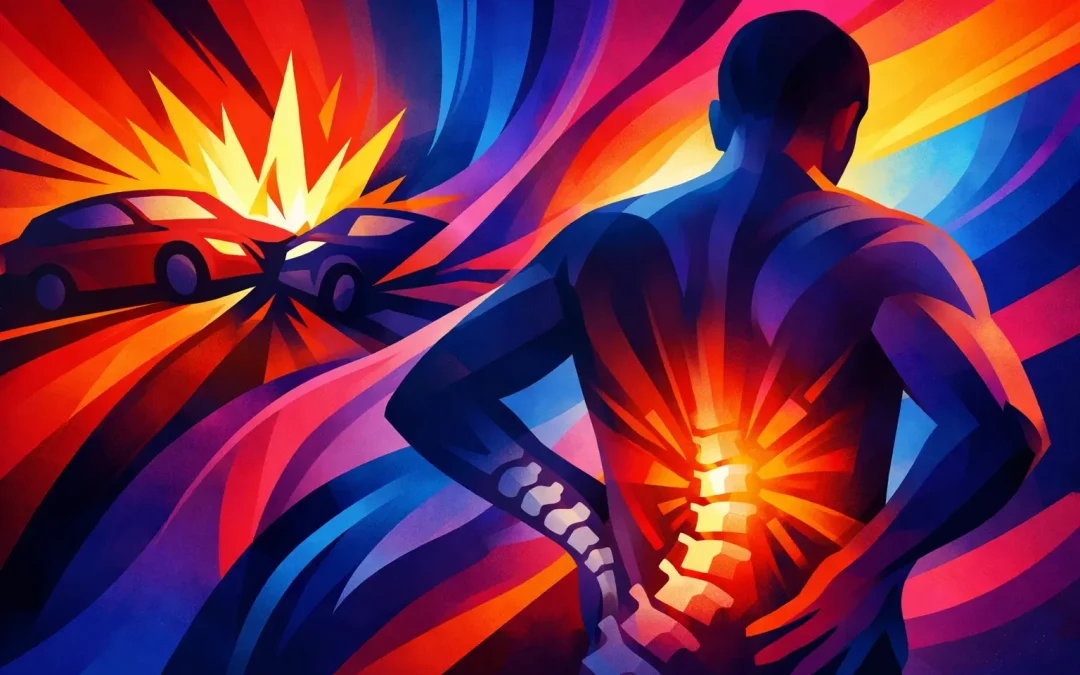
A rear-end collision at a stoplight can leave you standing beside a car that looks barely damaged, yet wake up the next morning unable to bend, turn, or get out of bed comfortably. That is why car accident back pain treatment should not wait until the pain becomes unbearable. A crash can strain muscles, irritate spinal joints, aggravate discs, and disrupt normal movement before you fully feel the effects.
Call for an evaluation as soon as possible after an accident, even if you believe the pain will pass. Early care helps identify what is injured, starts a recovery plan based on your condition, and creates timely medical documentation of the symptoms and limitations the crash caused.
Why back pain may appear hours or days after a crash
During a collision, your body is forced forward, backward, or sideways in a fraction of a second. Your seat belt may protect you from a far more serious injury, but the force can still travel through your hips, pelvis, mid-back, and low back. Muscles tighten to protect the spine, and inflammation can build after the initial adrenaline from the crash wears off.
This delayed pattern is common. You may feel stiff later that evening, then develop sharp pain when you twist, dull aching across the low back, muscle spasms, tingling, or pain that travels into a buttock or leg. Some patients also notice headaches, neck pain, sleep disruption, or difficulty sitting at work. These symptoms deserve an examination, not guesswork.
Pain severity does not always tell the whole story. A person with a minor-looking vehicle may have a meaningful soft-tissue injury, while someone else may feel little discomfort at first despite a disc or joint problem. Your provider needs to evaluate your symptoms, movement, medical history, and accident details together.
When back pain after an accident is an emergency
Most accident-related back pain needs prompt clinical care, but certain symptoms require emergency evaluation. Seek immediate emergency help for new loss of bladder or bowel control, numbness in the groin area, increasing leg weakness, severe chest or abdominal pain, fainting, confusion, or a sudden severe headache. Also seek urgent medical attention after a major impact, especially if you have severe pain, trouble breathing, or cannot move normally.
Do not try to push through these symptoms, drive yourself if you are impaired, or wait for a scheduled therapy visit. Emergency conditions come first.
Car accident back pain treatment begins with the right evaluation
Effective treatment is not one adjustment, one massage, or a generic exercise sheet. It starts with determining where your pain is coming from and how the injury is affecting your function. A thorough injury evaluation may include a review of the crash, a discussion of your symptoms, orthopedic and neurological testing, posture and range-of-motion assessment, and imaging or referral when medically appropriate.
This process matters for two reasons. First, it helps the care team choose safe treatment. Second, it establishes a clear record of your condition from the beginning. If your symptoms change, worsen, or require coordination with another healthcare provider, detailed documentation helps show the progression of your injury and care.
Be honest about every symptom, even if it seems unrelated to your back. Tell your provider about prior injuries, numbness, sleep problems, missed work, difficulty caring for your children, and activities you can no longer do comfortably. These details help shape a treatment plan that reflects your actual life, not just a pain score on a form.
Treatment should match the injury and your stage of recovery
In the first days after a crash, the goal is often to reduce pain, calm irritated tissue, and prevent the body from becoming more guarded and stiff. As symptoms improve, care should progress toward restoring normal motion, strength, balance, and confidence in movement. The pace depends on the injury. Starting too aggressively can flare symptoms, but doing nothing for too long can lead to deconditioning and persistent stiffness.
At Atlas Injury Center, accident care may combine several therapies under one roof rather than relying on a single approach. Chiropractic treatment can help address restricted spinal and joint motion when it is appropriate for the patient. Physical rehabilitation focuses on improving mobility, stability, and functional strength. Massage therapy may help reduce muscle tension and improve tolerance for movement, while clinical Pilates can build controlled core strength as recovery progresses.
Some patients with disc-related symptoms or chronic spinal compression may be candidates for spinal decompression or other specialized rehabilitation methods. Not every patient needs every therapy. The right plan is the one that matches your exam findings, goals, medical needs, and response to care.
What treatment often looks like week to week
Early visits may focus on controlling symptoms and identifying movements that aggravate the injury. Your provider may recommend modifications for sitting, sleep, lifting, driving, and work duties while treatment begins. You should leave with a clear understanding of what to do at home and what warning signs should prompt a call.
As pain and inflammation settle, rehabilitation should become more active. That may include guided stretching, core stabilization, hip and pelvic control, balance work, and gradual return-to-work or return-to-exercise activities. The goal is not simply to get through the day with less pain. It is to help you move safely and reduce the risk that an untreated crash injury turns into a long-term back problem.
What to do at home while you are being treated
Rest can be useful immediately after an injury, but complete bed rest for days is usually not the answer unless another medical provider directs it. Gentle, tolerable movement is often better than becoming completely inactive. Short walks, careful position changes, and the specific home exercises prescribed by your provider can support recovery.
Use heat or ice only as recommended for your stage of injury and symptoms. Avoid heavy lifting, repeated bending and twisting, high-impact workouts, and attempts to crack or forcefully stretch your own back. A temporary improvement after a risky movement does not mean the injury is resolved.
Keep a simple record of your symptoms between visits. Note pain levels, numbness or tingling, sleep quality, medication changes, missed work, and activities you cannot perform. This information helps your provider adjust treatment and can be valuable when insurance questions arise.
Do not let insurance concerns delay care
After an accident, people often worry about bills, insurance calls, vehicle repairs, and whether they need an attorney. Those concerns are real, but delaying an examination can make both your health situation and your injury claim more difficult. Insurance requirements and claim timelines may apply, so prompt evaluation is a practical step.
Bring your accident information and insurance details to your appointment if you have them. A qualified injury clinic can help explain the treatment process, maintain medical records, and coordinate with other healthcare practitioners when needed. If legal representation becomes appropriate, ask for a referral to an attorney suited to your situation. Your medical care should remain focused on getting an accurate diagnosis, appropriate treatment, and an honest record of your recovery.
Give your back injury the attention it deserves
A crash does not need to be dramatic to disrupt your spine, your work, and your daily life. If back pain, stiffness, spasms, radiating pain, or limited movement started after a motor vehicle accident, call us right away for an evaluation. You deserve clear answers, a personalized treatment plan, and a care team that treats your recovery with the urgency it requires.